
Reduce glare
Take the edge off bright reflections across televisions, monitors, tables and polished surfaces.
Coastal light, made liveable
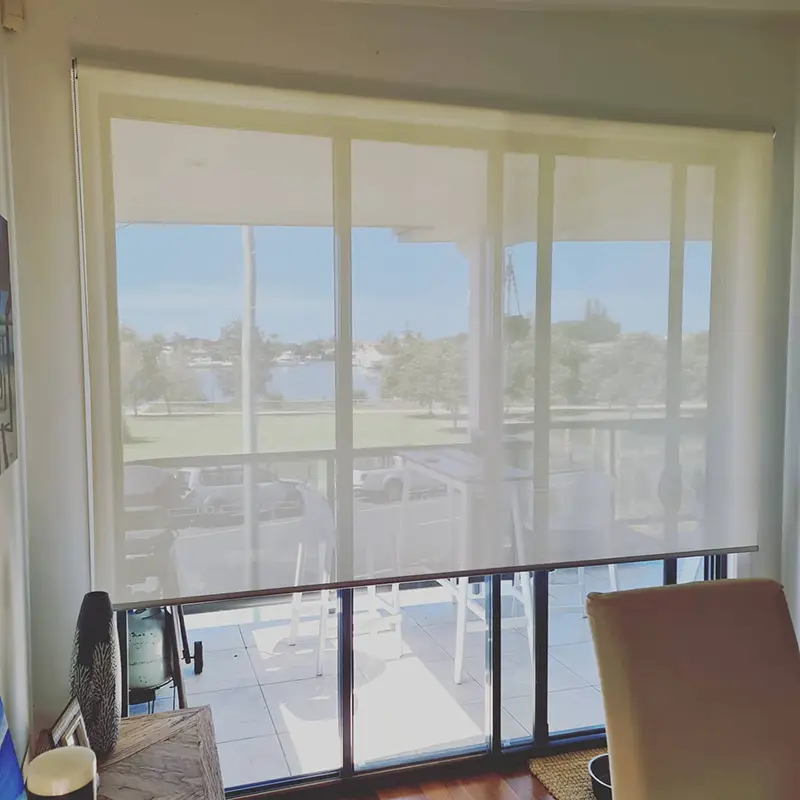
The brightest window in a room is often the one with the best outlook. Sunscreen is a type of blind fabric that takes the sharpness out of Gold Coast daylight without closing the window off.
Its one job is simple: make bright daytime rooms easier to live in while the view stays part of the room.
The honest bit: once the light outside drops, the privacy effect reverses. We plan the second layer with you when the room needs it.
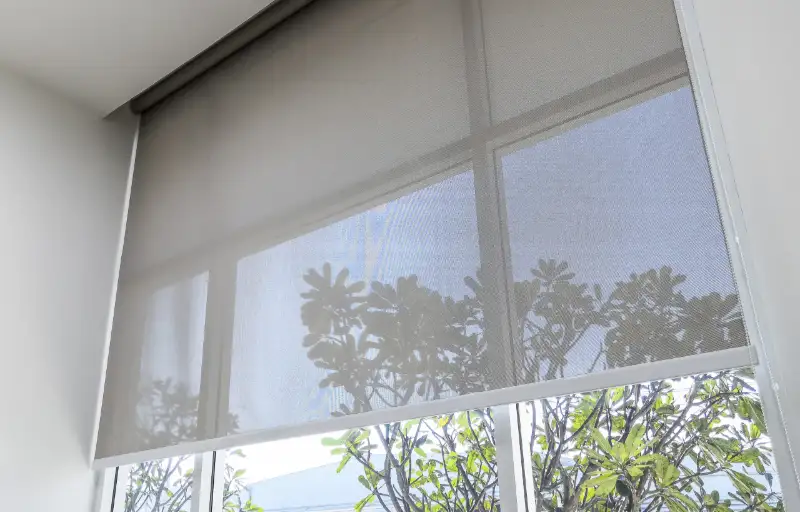
The same fabric can feel different as the light moves through the room.
Gold Coast-wide service
Mobile showroom visits
Free measure and quote
Start with the material
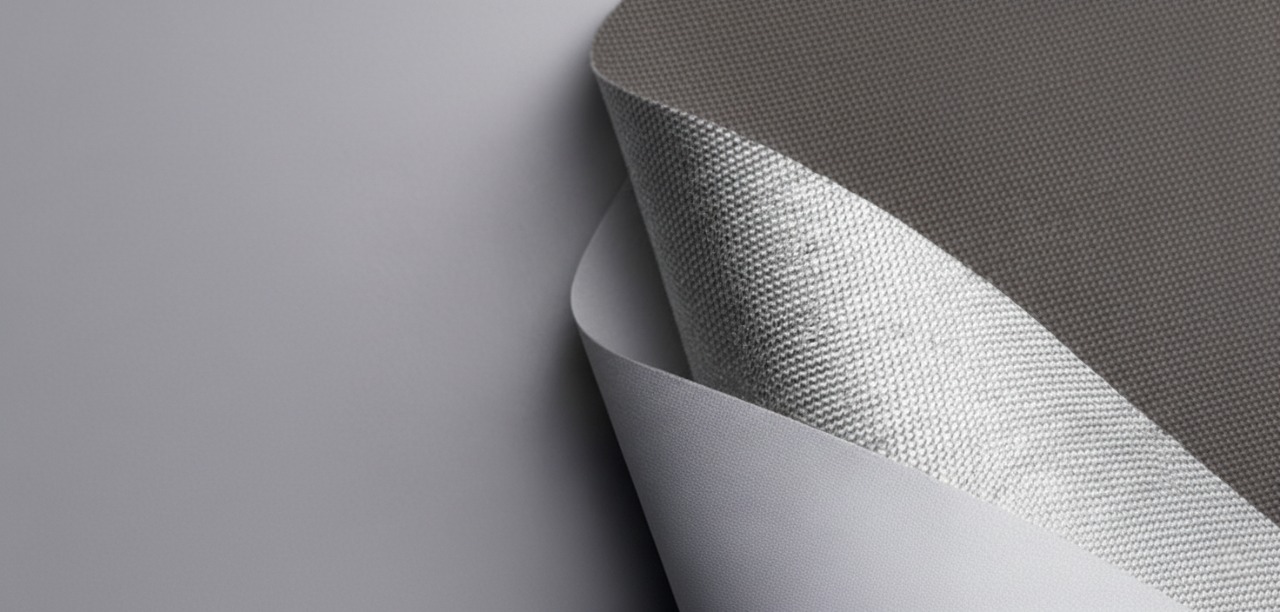
A roller blind is the mechanism: a tube, brackets, controls and a sheet of material that rises and lowers. Sunscreen is the open-weave fabric fitted to it. Fit the same fabric to a panel track and it becomes a sunscreen panel blind.
Tiny openings in the technical mesh allow an outward view when it is brighter outside than inside. The fibres interrupt direct sunlight, reduce harsh contrast at the glass and provide daytime screening. That distinction matters: the opening determines the format, while the fabric determines the feel.
At GCBC, Aventus sunscreen fabric is currently specified for roller blinds and panel blinds. It is not currently listed for Roman or vertical blinds. The window opening should determine the better format.
The main reason to choose it
Sunscreen fabric filters harsh daylight and reduces glare while allowing you to see outside during the day. It is ideal for windows where blockout fabric would make the room too dark or cut you off from the outlook.
Take the edge off bright reflections across televisions, monitors, tables and polished surfaces.
Make a hot, bright room more comfortable without turning the window into a blank wall.
Retain more of a garden, water, skyline or neighbourhood view while the blind is lowered.
Help screen rooms from the street or nearby homes during the brighter parts of the day.
Our honest rule
No fabric gives you view, darkness and dependable night privacy at the same time. Sunscreen can help reduce UV reaching furnishings, but fading also depends on the fabric, openness, colour, glazing, orientation and hours of direct sun.
Read the weave
The openness factor is the approximate percentage of open space in the weave. GCBC's Aventus sunscreen range is available in 3%, 5% and 10%: a lower number gives a tighter screen, while a higher number opens the view.
3% openness
A tighter weave gives stronger daytime screening and glare control. It can suit west-facing rooms where sun and contrast are the main problem.
5% openness
A practical middle ground for living areas where you want a useful outlook, glare and daytime privacy without making the fabric feel too closed.
10% openness
A more open weave preserves more of the view and lets more daylight through. It suits windows where the outlook matters most and direct exposure is limited.
Colour changes the result
Darker fabrics usually give a crisper outward view. Pale colours can feel softer in the room but may make the view more diffused. Aventus includes 17 colours across whites, linen tones, greys, charcoal and darker neutrals. A large sample against the glass tells you more than an online swatch.
A promise with a boundary
Sunscreen fabric gives its strongest screening during the day, when the exterior is brighter than the room. At night, the lighting reverses and people may be able to see in. Sunscreen fabric is not dependable night-time privacy.
For bedrooms, street-facing rooms or any window that needs privacy after dark, pair the sunscreen with blockout fabric, curtains or another opaque treatment. That combination is the trade-off that allows the blind to preserve the daytime view.
Start with the room
We look at what faces the glass, how the room is used and what you still want to see. The window conditions, blind format and installation determine the best answer — not a product label on its own.
Keep the blind lowered through bright parts of the day without losing the connection to a garden, balcony, canal, skyline or outdoor living area.
A roller may suit some openings, while sunscreen panel blinds may suit others. Door access, stack position, panel width and the way the glass is divided all matter.
A tighter weave can take the edge off strong sun and glare without forcing the household to choose between an unobstructed view and a closed blockout blind.
Openness, colour, distance and relative light affect privacy. The fabric needs to be judged against the actual glass, not chosen from a screen alone.
Filtering a bright reflection can make a monitor or television easier to view while the room remains naturally lit.
A sunscreen roller can be a clean light-control option, but fabric suitability around moisture, grease and cooking areas should be checked.
Choose the compromise
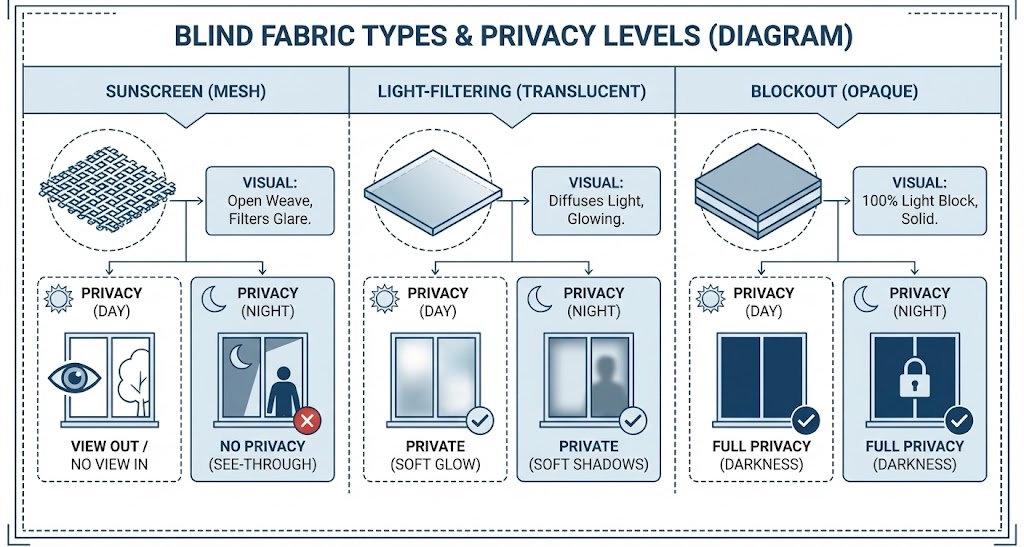
Sunscreen, light-filtering and blockout can all be fitted to roller blinds, but they solve different problems. The window — not a universal rule — should decide the fabric.
| Fabric | View | Light | Privacy | Best suited to |
|---|---|---|---|---|
| Sunscreen | Daytime view | Filtered daylight | Daytime screening | Glare control and retaining an outlook |
| Light-filtering | No clear view | Soft, diffused light | Privacy without full darkness | Gentle light where the view is secondary |
| Blockout | No view | Blocks direct light | Strong day and night privacy | Bedrooms, media rooms and full privacy |
Day and night control
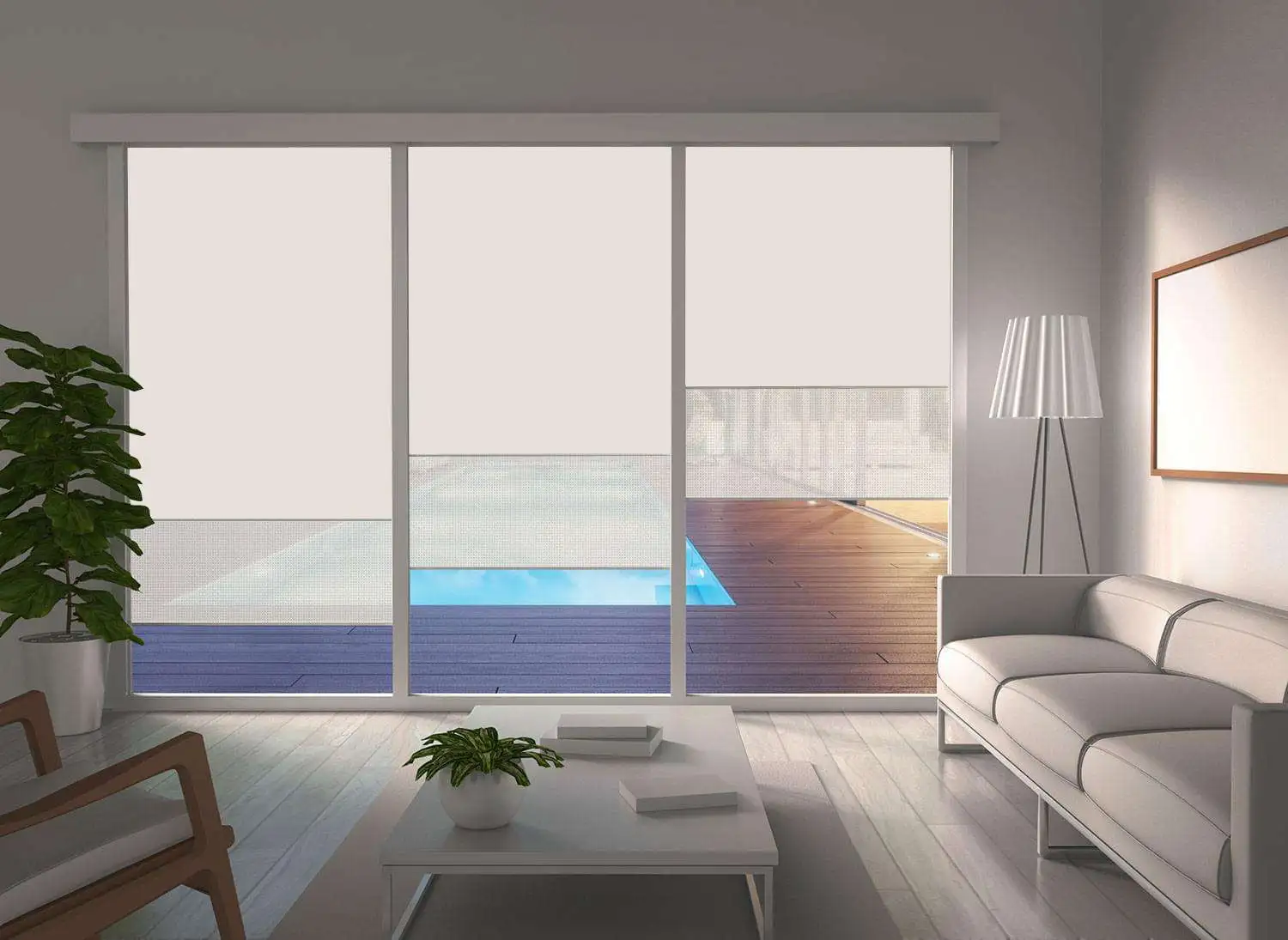
A sunscreen blind filters daytime light and preserves the view. Add a blockout blind behind it when you also need darkness and privacy after dark. Together, the two fabrics handle different conditions instead of forcing one blind to do everything.
The finished result depends on fit, side gaps, mounting and the installation.
Explore double roller blindsFrom first call to final install, we bring the decision back to the actual window — its light, outlook and privacy needs.
Compare openness and colour against the actual light, glass and outlook in your home.
We assess the opening, access, format and controls — not just the width of the window.
Choose the fabric and configuration, then move to a clear quote and installation.
The GCBC way
A sample can look calm on a screen and completely different against your glass. GCBC's mobile showroom brings the range to homes across the Gold Coast so you can compare colour, outlook, glare and screening in the light that matters.
The visit and quote are free.
Book a free in-home measureThe questions we answer at the window
A few practical answers before your measure and quote.
Its number-one job is controlling strong daytime sun and glare while allowing you to keep looking outside.
Yes. At night, lights inside can make the room visible from outdoors. Add blockout fabric or curtains where night privacy is required.
A 3% fabric gives tighter screening and glare control, 5% balances the competing needs and 10% retains a clearer view. Orientation, neighbours and colour can change the best choice.
It can help reduce UV reaching furnishings, flooring and artwork, but fading also depends on fabric, openness, colour, glazing, orientation and hours of direct sun. It is not a guarantee that fading will stop.
GCBC's Aventus sunscreen fabric is currently specified for roller blinds and panel blinds. Roller blinds suit most individual windows, while panel blinds can be practical across wide sliding doors and large expanses of glass.
No. Sunscreen fabric preserves a daytime view; blockout fabric is opaque and provides darkness and privacy. A double roller combines both.
Yes. Motorisation is useful across wide glass, difficult-to-reach windows or groups of blinds that should move together.
Yes. GCBC brings the range to your Gold Coast home so you can judge colour, outlook, glare and screening at the actual window.
No hard sell, just the right combination
Sunscreen blinds are designed for daytime use: they soften harsh light, reduce glare and help preserve the outside view. They do not provide dependable privacy at night. If after-dark privacy matters, we can help pair the sunscreen fabric with blockout blinds or curtains for each room.
Request a free in-home consultationTell us about the room
Tell us what you are trying to solve and we can bring the relevant fabrics, formats and options to the consultation.